

Technical Specifications & Compliance
Third-party fire, VOC and durability reports, ready for your submittal.
At a Glance
Test Results
Measured values from accredited third-party labs, for the materials as tested.
| Standard | Material | Lab & date | Result |
|---|---|---|---|
| ASTM E84 surface burning | 20 oz vinyl, non-woven backing | Intertek · Apr 2017 | Class A · FSI 10 · SDI 25 |
| ASTM E84 surface burning | 20 oz vinyl, OSNA fabric backing | Intertek · Apr 2017 | Class A · FSI 20 · SDI 95 |
| ASTM E84 surface burning | Nolar non-vinyl | American Flamecoat · Nov 2021 | Class A · FSI 10 · SDI 90 |
| CAN/ULC-S102 | 20 oz vinyl, non-woven backing | American Flamecoat · Mar 2018 | FSR 5 · SDC 40 |
| CAN/ULC-S102 | 20 oz vinyl, OSNA backing | American Flamecoat · Mar 2018 | FSR 5 · SDC 40 |
| CAN/ULC-S102 | 20 oz vinyl, 3-ply Mylar | American Flamecoat · Mar 2018 | FSR 5 · SDC 30 |
| CDPH V1.2-2017 VOC emissions | 20 oz vinyl, non-woven and fabric backed | Berkeley Analytical · May 2017 | Compliant: classroom & office |
| ASTM F793 tear strength | 20 oz vinyl, non-woven backing | Govmark · Jan 2014 | 3,501 / 4,472 gf (Type II min. 400) |
| ASTM E96 water vapor transmission | Terralon | Vartest · Jun 2012 | 15.75 perms |
Class A requires a flame spread index of 0–25 and a smoke developed index of 450 or less. Download the full reports below.
What Each Standard Means
Four Things a Building Department Asks
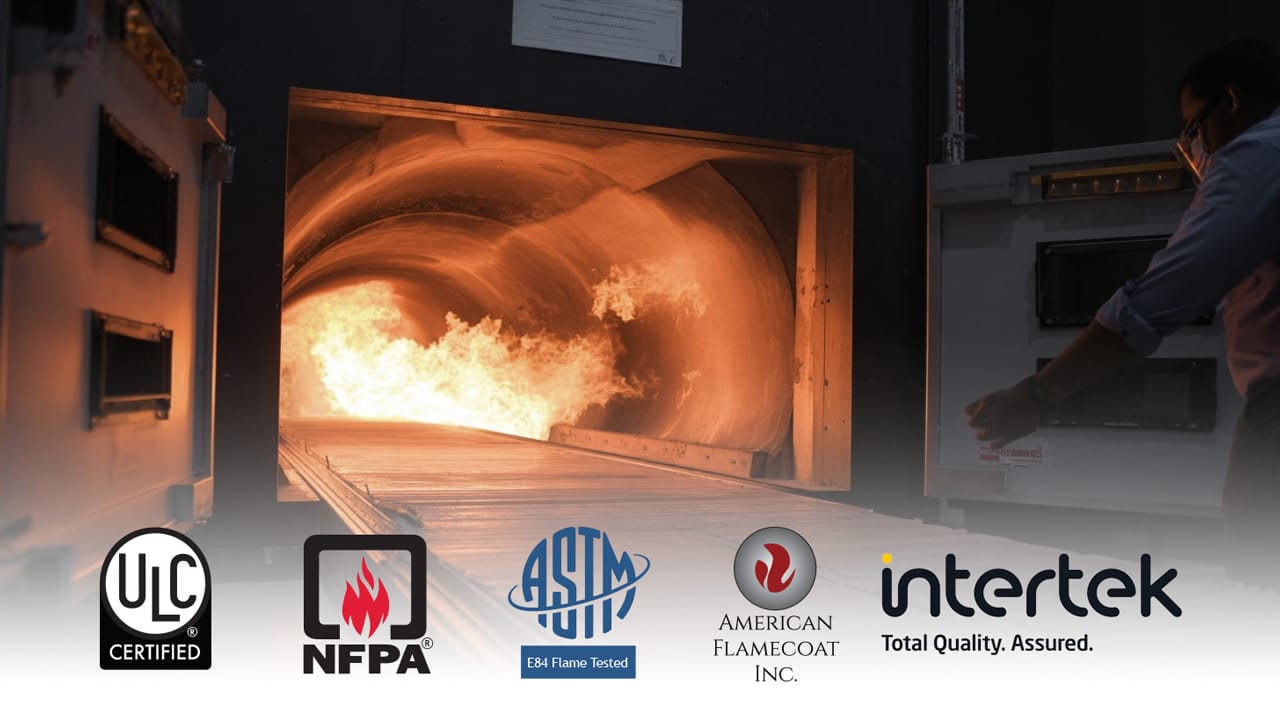
Fire Safety
Class A in the Tunnel Test
ASTM E84 burns a 25-foot sample and scores flame spread and smoke against cement board (0) and red oak (100). Our 20 oz Type II scores FSI 10, SDI 25, well inside Class A, and holds CAN/ULC-S102 reports for Canadian projects.

Indoor Air Quality
Low-VOC for Schools and Offices
Berkeley Analytical tested both 20 oz constructions to CDPH Standard Method V1.2-2017 (CA 01350): compliant for school classrooms and private offices, the method LEED v4 and WELL reference for low-emitting materials.
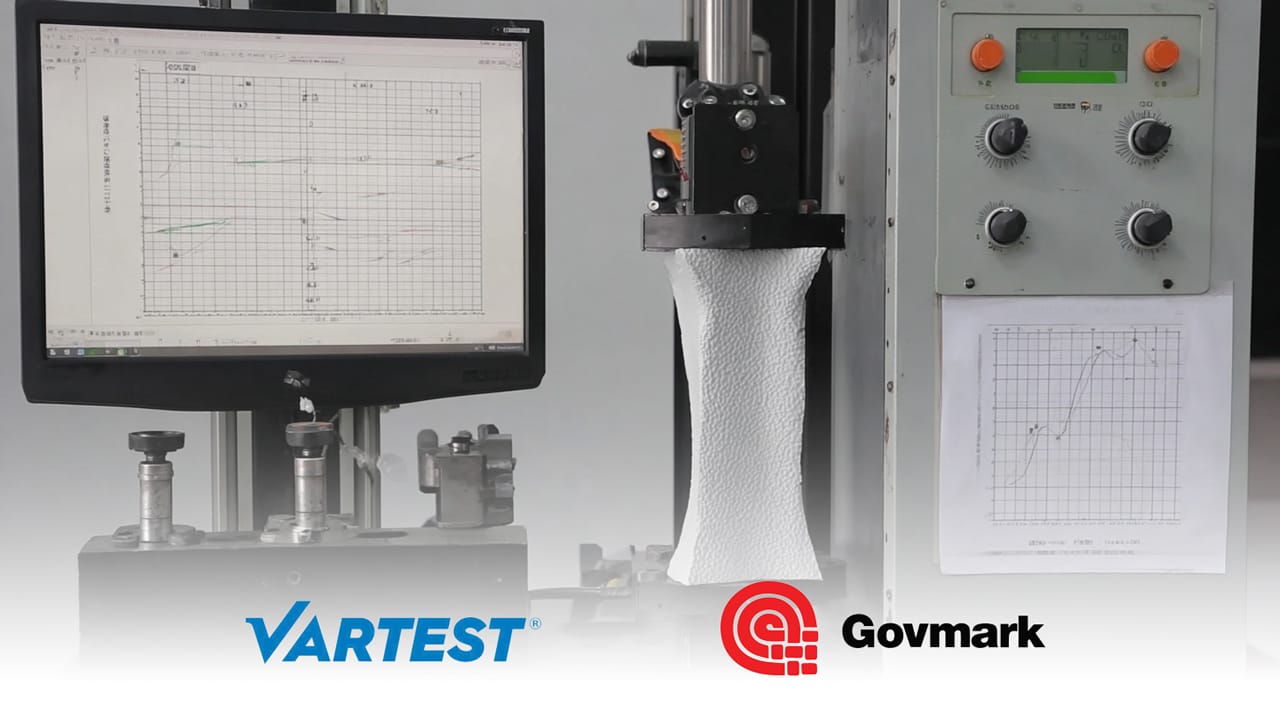
Durability
Built for Type II Traffic
Under ASTM F793, our 20 oz non-woven needs 3,501 gf to tear along the roll and 4,472 gf across it, against a Type II minimum of 400 gf. The substrate passes the full WA-101 Type II criteria, from scrubbability to colorfastness.

Material Transparency
What's in the Wall
Health Product Declarations, UL-certified Environmental Product Declarations and a Red List declaration for PVC-free Terralon document material content for disclosure credits and healthy-interiors standards.
Download
Certification Library
Every report in full, with the lab, the date and the standard, ready to attach to a submittal.
Fire safety
ASTM E84 for the United States and CAN/ULC-S102 for Canada, plus European and floor-system tests for specialty materials.
Indoor air quality
VOC emissions tested by Berkeley Analytical, an ISO/IEC 17025 accredited lab, to the California CDPH standard method.
Durability & performance
Tear strength, moisture behavior and the substrate manufacturer's Type II specification sheet.
Material transparency
Ingredient and life-cycle disclosures from the substrate manufacturer. The HPDs and EPDs below have passed their validity dates; ask us for the current versions before you submit them.
For Specifiers
Spec Language and Submittals
A starting point for your Section 09 72 00 Wall Coverings. We'll tailor it to your project on request.
Sample Part 2 language · 09 72 00
2.1 WALL COVERING, WC-1
A. Source: Fine Print NYC, New York, NY (fineprintnyc.com).
B. Product: Custom digitally printed Type II vinyl wallcovering, 20 oz per linear yard, woven or non-woven fabric backing.
C. Performance: Meets WA-101 Type II criteria.
D. Surface-burning characteristics: ASTM E84, Class A; flame-spread index 25 or less, smoke-developed index 450 or less.
E. Tear strength: ASTM F793, Category V Type II minimum.
F. Low-emitting: Compliant with CDPH Standard Method V1.2-2017 for school classroom and private office scenarios.
G. Printing: UV-cured inks; maximum printable width 52 in.; pattern, colorway and scale as indicated on Drawings.
H. Sample: 12 x 24 in. press proof on the production material, approved before production.
What we supply for submittals
- Product data and the third-party test reports on this page
- Physical sample: a 12″ × 24″ press proof on the production material
- Shop drawings: a panel schematic for every wall, each panel labeled by position
- Certificates: ASTM E84, CAN/ULC-S102, CDPH V1.2 and ASTM F793
- Installation instructions and adhesive specifications
- Reorders matched from print files we keep for 5 years
Need pre-formatted spec language? Call (212) 619-5446 or request it with your project details.
How to Use These Reports
From Spec to Sign-Off
1. Identify the standards
Class A for most commercial interiors, CDPH V1.2 for schools and healthcare, CAN/ULC-S102 in Canada.
2. Download the reports
Each one names the lab, the test date and the standard, ready for a submittal package.
3. Write them into Division 09
Copy the limits into 09 72 00, for example: ASTM E84 Class A, FSI ≤25, SDI ≤450.
4. Submit for review
Include the reports with your submittal for the building department or authority having jurisdiction.
Certified, Safe and Commercially Viable
Tested by Intertek, American Flamecoat, Berkeley Analytical, Govmark and Vartest
 American Society for
Testing and Materials Passes strict standards and tests for wallpaper materials
 Underwriters Laboratories
of Canada Tested and verified to meet rigorous safety standards
 National Fire
Protection Association Verifies fire, electrical, and fields of life safety
 Berkeley
Analytical Confirms compliance for all VOC and air standards
Specs & Compliance, Answered
Fire ratings
What is an ASTM E-84 Class A fire rating? ▾
ASTM E-84, the Steiner tunnel test, measures how fast flame spreads across a material's surface and how much smoke it produces, against inorganic cement board (0) and red oak flooring (100). Class A is the top classification: a Flame Spread Index of 0–25 and a Smoke Developed Index of 450 or less, the rating most building codes require for commercial corridors, lobbies and exits.
Our 20 oz Type II wallcoverings test well inside it: FSI 10, SDI 25 (non-woven backing) and FSI 20, SDI 95 (OSNA fabric backing), both tested by Intertek.
Is fire-rated wallpaper fireproof? ▾
No. Nothing hung on a wall is fireproof. A Class A rating means the material spreads flame slowly and produces limited smoke under a standardized test, which is what building codes regulate. It is the right thing to ask for when you search for fire-resistant, fire-retardant or fireproof wallpaper.
What's the difference between fire-rated, fire-retardant and fire-resistant wallpaper? ▾
Fire-rated means the material has been tested to a standard and classified, such as ASTM E-84 Class A. Fire-retardant describes a chemical treatment that slows burning. Fire-resistant is a general term with no fixed meaning. For a code-regulated space, ask for the test report: the standard, the lab, the date and the classification for the exact material you're buying.
What do I need for a project in Canada? ▾
CAN/ULC-S102 is the standard for interior finishes in Canadian commercial buildings. We have American Flamecoat reports for our 20 oz non-woven (flame spread 5, smoke developed 40), 20 oz OSNA (5 / 40) and 3-ply Mylar (5 / 30) wallcoverings, plus a CAN/ULC-S102.2 report for our 20 oz digital vinyl (13 / 105).
Does the adhesive affect the fire rating? ▾
It can. Tunnel-test results describe the material as mounted in the test, so install with a commercial wallcovering adhesive following the manufacturer's instructions. We supply the adhesive specifications with every order.
Durability & air quality
What is Type II commercial wallcovering? ▾
Type II is the medium-duty commercial class for corridors, lobbies, hotel rooms and other high-traffic spaces. Type I is lighter, for low-traffic rooms; Type III is the heaviest, for the hardest-wearing areas. Our commercial stock is a 20 oz per linear yard fabric-backed vinyl that passes the WA-101 Type II criteria (tear, break strength, scrubbability, colorfastness, stain resistance and more), per the substrate manufacturer's specification sheet.
How strong is the material? ▾
Under ASTM F793 (Elmendorf tear), our 20 oz non-woven averaged 3,501 gf in the machine direction and 4,472 gf across it, against a Type II minimum of 400 gf. Tested by Govmark.
Do you have VOC emissions data? ▾
Yes. Both our fabric-backed and non-woven-backed 20 oz vinyls were tested by Berkeley Analytical to CDPH Standard Method V1.2-2017 (CA Section 01350) and are compliant for school classrooms and private offices, with predicted TVOC of 0.5 mg/m³ or less. CDPH V1.2 is the method LEED v4 and WELL reference for low-emitting materials.
Is it suitable for healthcare, schools and other sensitive environments? ▾
The CDPH V1.2 school and office compliance is the usual requirement for those spaces, and the substrate manufacturer's specification sheet lists the 20 oz Type II as passing ASTM G21 for mold and mildew resistance. See our guide to choosing safe wallpaper for sensitive environments.
Specifying & submittals
How do I cite these certifications in a specification? ▾
Each report gives the standard, the lab and the test date, which you can copy into your Division 09 (09 72 00 Wall Coverings) specification. A sample paragraph is on this page; we'll also tailor spec language to your project on request.
What do you provide for a submittal package? ▾
Product data and the test reports on this page, a 12″ × 24″ press proof on the production material as the physical sample, a panel schematic for each wall as the shop drawing, and adhesive, installation and maintenance instructions. Tell us your section's submittal list and we'll match it.
Can I download all the certifications at once? ▾
Yes. The full set of reports is available as a single ZIP file from the documents section of this page.
More From the Guide
Fire ratings, safe materials for sensitive spaces and choosing a wallcovering type.
Learn How to Choose Fire-Rated, Building Code Certified Wallpaper
Fire ratings and certifications for commercial interiors.
Read more→
Choosing Safe Wallpaper for Sensitive Environments
Low-VOC and mold-resistant materials for schools, healthcare and nurseries.
Read more→
A Buyer's Guide for Type 1 vs Type 2 vs Peel & Stick Wallpapers
How the three wallcovering types compare, and which suits each space.
Read more→
How Wallpaper Empowers Architects and Designers
What printed wallcovering makes possible in a design scheme.
Read more→Need Spec Language for Your Project?
Tell us the space, the jurisdiction and the standards on your sheet, and we'll send the reports and tailored Division 09 language.