Reproducing Historic and Out of Print Wallpaper
Discover various methods of printing, along with a complete list of wallpaper companies that specialize in them.
 By Joseph A. Gornail

Recreating wallpaper is nothing new, in fact, it has been a tradition in the wallpaper industry for centuries. Designers and printers have always looked to the past for inspiration, emulating the styles and designs of earlier eras. In many ways, these original wallpapers were recreations - of nature, status, environment, or mood. This spirit lives on today as people choose to preserve a bit of history each time they reproduce an out-of-print design.
One notable example of this trend is the Arts and Crafts movement of the late 19th century. Designers during this time were inspired by the simplicity and natural beauty of earlier eras and sought to create designs that reflected these ideals. The resulting wallpapers featured simple patterns and nature-inspired motifs, and were created using traditional printing techniques like woodblock and surface printing.
Today, designers and printers continue to look to the past for inspiration, and the demand for vintage and historical wallpaper designs remains strong. However, recreating these designs can be a challenging process, as there are so many different techniques and solutions, both old and new. Anyone interested in undertaking a wallpaper recreation should have a basic knowledge of these techniques in order to achieve the best results. By understanding the history and evolution of wallpaper printing, we can better appreciate the art and craft of this timeless tradition.
Popular Printing Techniques for Reproducing Wallpaper
Woodblock Printing
Woodblock printing is one of the oldest printing techniques and was first used in China around 200 AD. The process involves carving a design into a block of wood and then using that block to print the design onto paper or fabric.

Gravure Printing
Gravure printing, also known as intaglio printing, is a technique that involves etching a design onto a copper cylinder. The cylinder is then inked and the excess ink is wiped off, leaving ink only in the etched areas. The paper is then pressed against the cylinder, transferring the design onto the paper.

Stenciling
Stenciling is a technique that involves using a template to create a repeated pattern. The template can be made from paper, plastic, or metal, and the design is created by cutting out certain parts of the template. The template is then held against the surface to be decorated, and paint or ink is applied over it.

Surface Printing
Surface printing is a traditional printing technique that creates a soft, textured finish on wallpaper. The design is transferred to a printing roller, which is then inked and rolled onto the paper. The roller is slightly raised in places to create a three-dimensional effect.

Flexographic Printing
Flexographic printing is a modern printing technique that uses a flexible printing plate to transfer ink onto the substrate. The printing plate is made from a flexible material such as rubber or plastic, and the design is etched into the plate.

Digital Printing
Digital printing is a modern printing technique that uses digital files to print onto a substrate. This method eliminates the need for physical printing plates or screens, allowing for greater flexibility in design and faster turnaround times. Digital printing also allows for customization and personalization of wallpaper designs. However, digital printing may not be suitable for large-scale wallpaper production or for printing certain types of designs, such as textured or metallic patterns. Additionally, the colors of digital printing may not always match that of traditional printing methods.

A Brief History of Vintage Printing Companies
The techniques used in wallpaper printing are diverse and have evolved over centuries. Each technique offers a unique set of advantages and disadvantages, and it is up to the designer to choose the right one for their particular project. The printing technique used often depends on the design of the wallpaper and the era it is meant to emulate.
Many companies in the wallpaper industry specialize in certain printing techniques, while others may use a combination of several techniques. For example, Schumacher has been using block printing since the company’s founding in 1889, and still produces hand-printed wallpapers today. Cole & Son, on the other hand, is known for its innovative designs and high-quality printing techniques, including gravure printing and surface printing. By understanding the strengths and limitations of each technique, designers and printers can create wallpaper designs that are both beautiful and functional.
Here is a List of Printing Companies that produce wallpaper through traditional methods.
Bradbury & Bradbury Art Wallpapers
Bradbury & Bradbury Art Wallpapers is a California-based wallpaper manufacturer known for its high-quality, hand-printed wallpapers inspired by historical designs. The company’s wallpapers are produced using traditional printing techniques, such as surface printing and block printing, as well as more modern methods like digital printing. Bradbury & Bradbury is dedicated to preserving and recreating the beauty and craftsmanship of vintage wallpapers. The company offers a wide range of wallpaper designs, including Arts & Crafts, Art Deco, Victorian, and more.
Cole & Son
Cole & Son is a British wallpaper manufacturer established in 1875. The company is known for its innovative designs and high-quality printing techniques, including surface printing and more modern digital printing. Cole & Son has a long history of collaborating with renowned designers, including Vivienne Westwood and Fornasetti, and has also produced wallpapers for historic landmarks such as Buckingham Palace and the Houses of Parliament.
Farrow & Ball
Farrow & Ball is a British paint and wallpaper company founded in 1946. The company is known for its high-quality, handcrafted wallpapers and paints, which are produced using traditional techniques such as surface printing and more modern methods like digital printing. Farrow & Ball is dedicated to creating products that are environmentally friendly, and uses only the finest quality ingredients in its paints and wallpapers. The company’s wallpapers are available in a wide range of colors and designs, and include popular patterns such as “Lotus,” “Hornbeam,” and “Gable.”
Morris & Co.
Morris & Co. is a British wallpaper and textile company founded in 1861 by the famous designer William Morris. The company is known for its beautiful, handcrafted wallpapers and fabrics, which are produced using traditional printing techniques such as hand-printing. Morris & Co. is dedicated to preserving and recreating the beauty and craftsmanship of vintage wallpapers and fabrics, and its designs are inspired by historical patterns and styles.
Zuber & Cie
Zuber & Cie was a French wallpaper company known for its scenic and panoramic wallpapers, which were hand-printed using woodblocks. The company was founded in 1797 and is still operational today. Zuber & Cie’s wallpapers are highly detailed and have been used in a number of prestigious locations, including the Palace of Versailles and the White House.
Warner & Sons
Warner & Sons was a leading wallpaper manufacturer in the UK. The company was founded in 1884 and was known for its high-quality wallpapers, which were created using techniques such as surface printing
A List of Wallpaper Companies No Longer in Business
Waverly
Waverly is a historic wallpaper and home furnishings company founded in 1923 in New York. The company became known for its beautiful and colorful designs, particularly its floral prints. Waverly’s wallpapers were often used in American homes during the mid-20th century and were popular for their cheerful and lively motifs. The company went out of business in 2017.
Blue Mountain
Blue Mountain was a Canadian wallpaper company that was established in 1991. The company was known for its high-quality wallpapers with nature-inspired designs, including nautical, floral, and rustic motifs. Blue Mountain was particularly popular during the 1990s and 2000s, but it went out of business in 2019.
Sunworthy
Sunworthy was a Canadian wallpaper company that was established in 1976. The company produced a wide range of wallpapers, including geometric, floral, and striped designs. Sunworthy was known for its innovative designs and high-quality printing techniques, including gravure and flexographic printing. The company went out of business in 2009.
Chatsworth
Chatsworth was a British wallpaper and textile company that was founded in 1860. The company was known for its beautiful and intricate designs, particularly its Victorian and Arts & Crafts-inspired wallpapers. Chatsworth was particularly successful during the late 19th and early 20th centuries, but it went out of business in 1971.
Paper Illusions
Paper Illusions was a wallpaper company known for its unique faux finish designs. The company’s wallpapers were often textured and created to look like natural materials such as stone, brick, or wood. Paper Illusions was popular during the 1990s and 2000s, but it went out of business in the 2010s.
Imperial Wallcoverings
Imperial Wallcoverings was a Canadian wallpaper company that was founded in 1928. The company produced a wide range of wallpapers, including geometric, floral, and striped designs. Imperial Wallcoverings was known for its innovative designs and high-quality printing techniques, including gravure and flexographic printing. The company went out of business in the 1990s.
Sanitas
Sanitas was an American wallpaper company that was established in 1902. The company produced a wide range of wallpapers, including floral, striped, and geometric designs. Sanitas was known for its high-quality printing techniques and innovative designs. The company was particularly successful during the early 20th century, but it went out of business in the 1940
In Conclusion
The companies that specialize in wallpaper printing have contributed to the development of this art form and have helped to keep the tradition alive. They have pushed the boundaries of what is possible with printing techniques and have created beautiful and unique designs that reflect the trends of their respective eras.
Recreating vintage wallpaper designs and patterns is a fascinating process that allows us to capture a bit of history and incorporate it into our modern-day homes. Through the use of traditional and modern printing techniques, we are able to bring to life the beauty and elegance of past eras, and create designs that are both classic and timeless. Whether we are inspired by the simple patterns of the Arts and Crafts movement or the ornate designs of the Victorian era, wallpaper printing allows us to express our personal taste and style, while paying homage to the craft’s rich history.
Questions We Hear About Historic Wallpaper Printing Methods
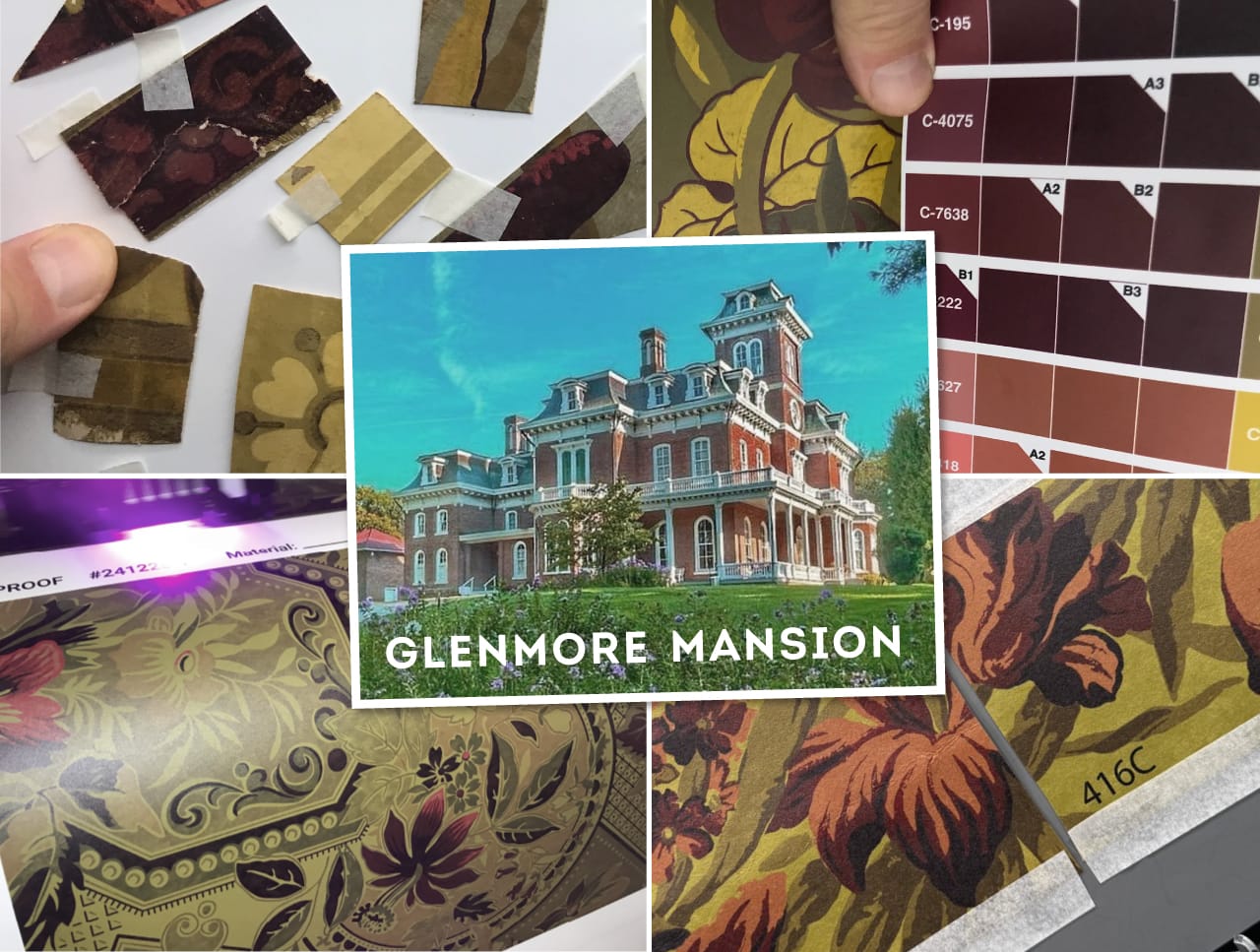
Can you reproduce a hand-blocked or surface-printed wallpaper digitally? We can reproduce its design and color faithfully. The finish is different: digital printing doesn’t create raised ink, so the surface takes on the texture of the paper it’s printed on. We’re candid about that; at Glenmore Mansion, we describe the result as a modern, digitally printed reproduction, not a hand-blocked archival paper.
My wallpaper’s manufacturer is out of business. Can it still be reproduced? Yes. Out-of-print patterns are much of our work. See our discontinued wallpaper service.
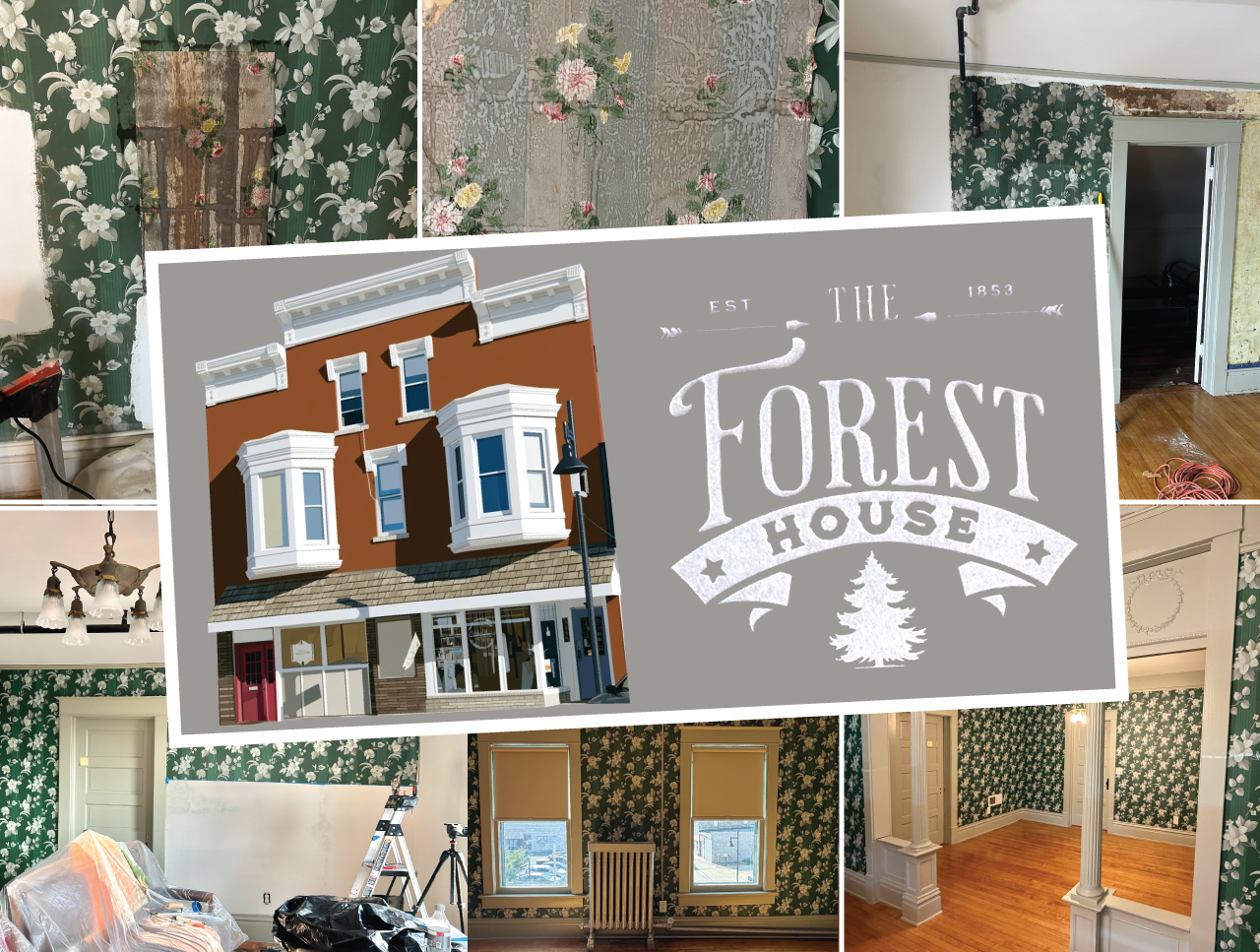
What material should a historic reproduction be printed on? It depends on the wall and the room. Glenmore’s foyer used a breathable non-woven paper suited to old plaster; a 1905 Dutch Colonial used Nolar, a traditional paper with no adhesive; the Forest House used Mystical.
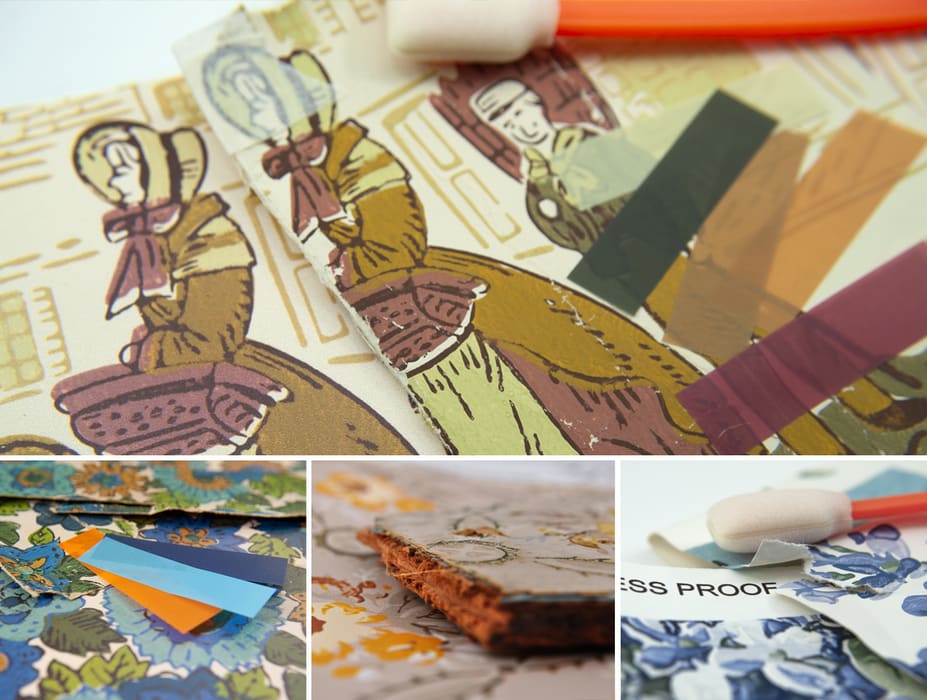
Which printing method do you use? Digital printing with UV-cured CMYK inks, matched against our library of more than 20,000 catalogued colors. It’s the most flexible method for repairing, adjusting and rebuilding a pattern.
Can you match a wallpaper that was gravure- or flexo-printed? Usually, yes. The colors and design can be matched closely; specialty inks like metallics are the exception. Our guide to color matching vintage wallpaper covers how each printing method affects the match.