
It All Starts With the Scan
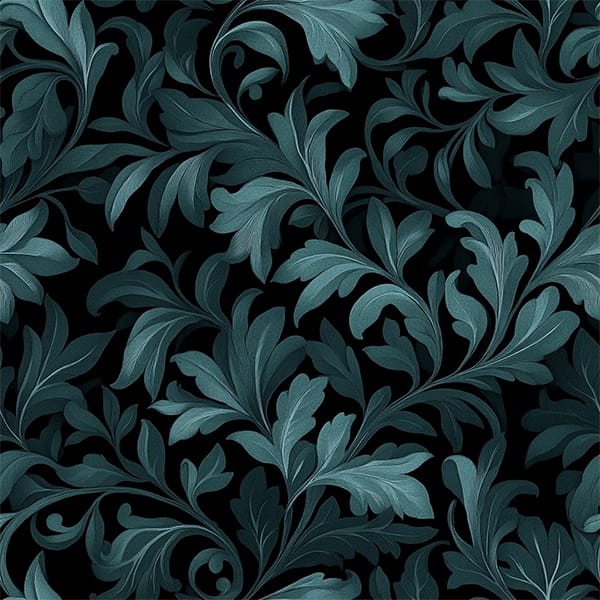
In-house 1000 dpi, 48-bit scanning: nothing is lost before the real work begins.
Why It Matters
The Scan Sets the Ceiling for Everything After
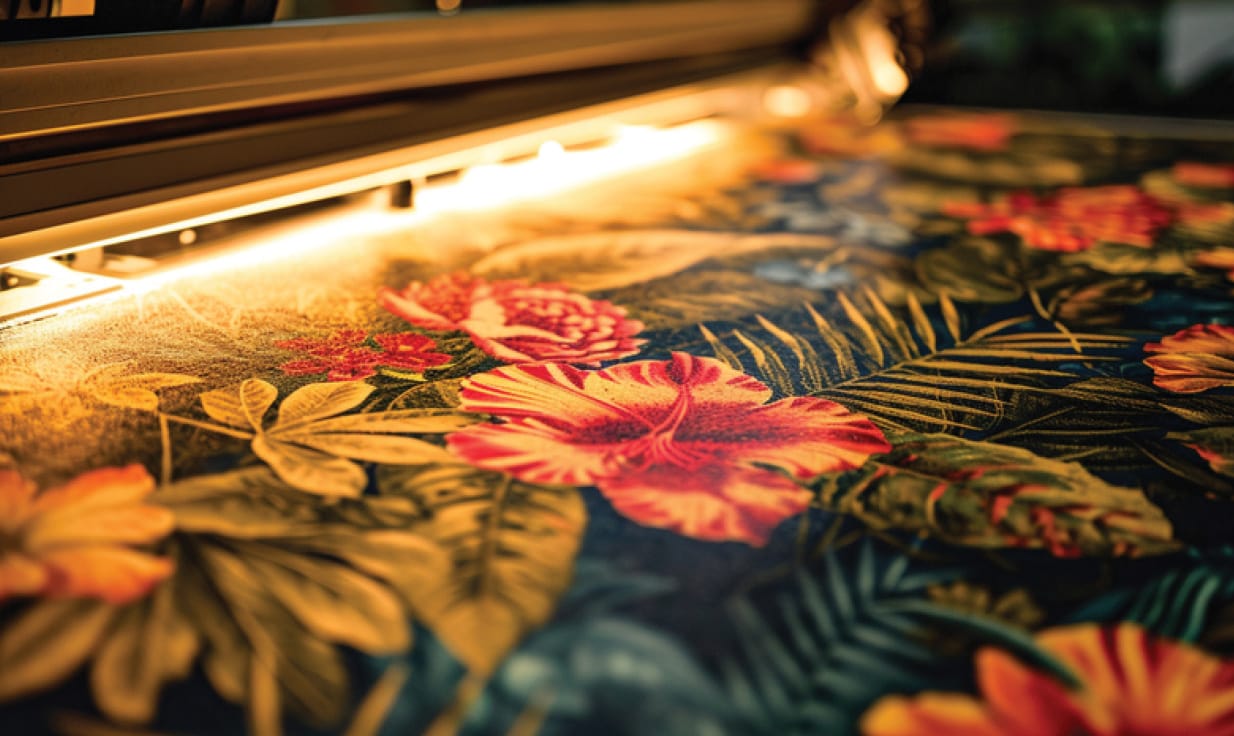
Retouching, colorway, printing, every step downstream can only be as good as the capture it starts from. Detail that wasn't scanned can never be recovered later, and a phone photo or an office flatbed quietly caps the fidelity of the whole job. We treat the scan as the single most important decision in a recreation, and because our scanners are calibrated to our own presses and pegged to a 20,000+ color library from the first pass, the file is born print-ready, not merely digitized.
The Capture
What Every Scan Delivers
The Equipment
Drum and Cruse, Chosen for Your Sample
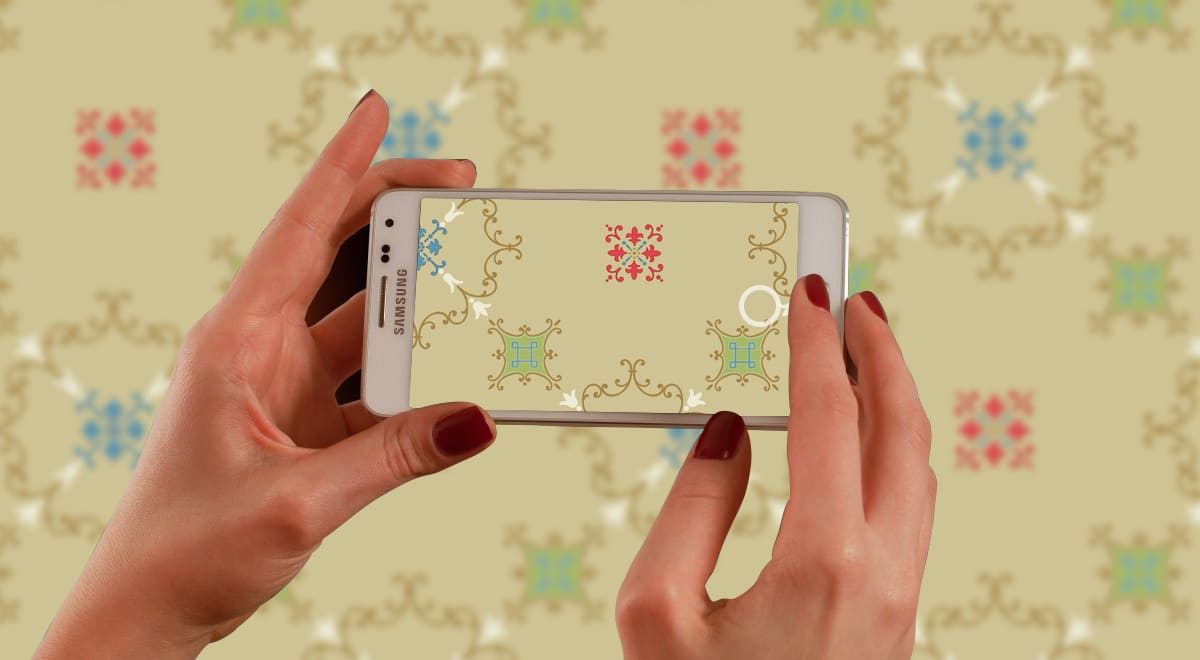
We run two professional scanning systems and choose per project. A drum scanner rotates the sample against a fixed head for the deepest tonal detail; a large-format Cruse moves the head across a flat, stationary piece, ideal for the texture of wallpaper, and the same class of scanner museums use to digitize priceless works. The Cruse is contactless: your original rests on a vacuum table and is never pressed, bent, or clamped under glass, so even a brittle, crumbling fragment is safe. Between them we reach a sharpness, dynamic range, and color a flatbed or a camera simply can't.
Joseph took my brittle border fragment and sensitively captured the color quality of the original in a brand-new run. Always responsive, delivered on time, and my crew loved the product quality.
Beyond Flat
We Capture the Texture, Not Just the Image
Old wallpaper isn't flat, it has paper grain, embossing, and the relief of the original inks. So we light the surface from several angles, not one: a 45-degree sweep to bring out embossing and flock, a low raking beam to map cracks and wear, polarized filters to tame the glare off metallics, and multi-pass composites where a single angle misses. That surface data is what makes the reproduction read as the wallpaper itself, not a flat picture of it.
Handled With Care
Built Around Fragile Originals
Much of what we scan is brittle, shedding, or a century old, the process is built for exactly that.
Contactless & Vacuum-Held
Gentle suction holds a curling, cracked sample flat, no clamps, no weights, no glass.
A Controlled Pass
Low-heat LED, a dust-proof chamber, and a slow pass for anything shaky or shedding.
Reinforced by Hand
Weak spots are backed with archival tape and a Mylar sheet before a scan ever runs.
Stored & Returned Safely
Kept climate-controlled, and shipped back in the exact condition it arrived.
Can't take it off the wall? Send a cut wall section, or high-resolution photos, and we'll work from that.
Scanning, Answered
The capture
What resolution and color depth do you scan at? ▾
1000 dpi in ultra-high definition, at 48-bit color, far richer than the 24-bit of a standard scanner. That headroom captures the thread of the paper and the faintest surviving tone, and it's what lets the retouching and color work downstream be as faithful as they are.
How large a sample can you scan? ▾
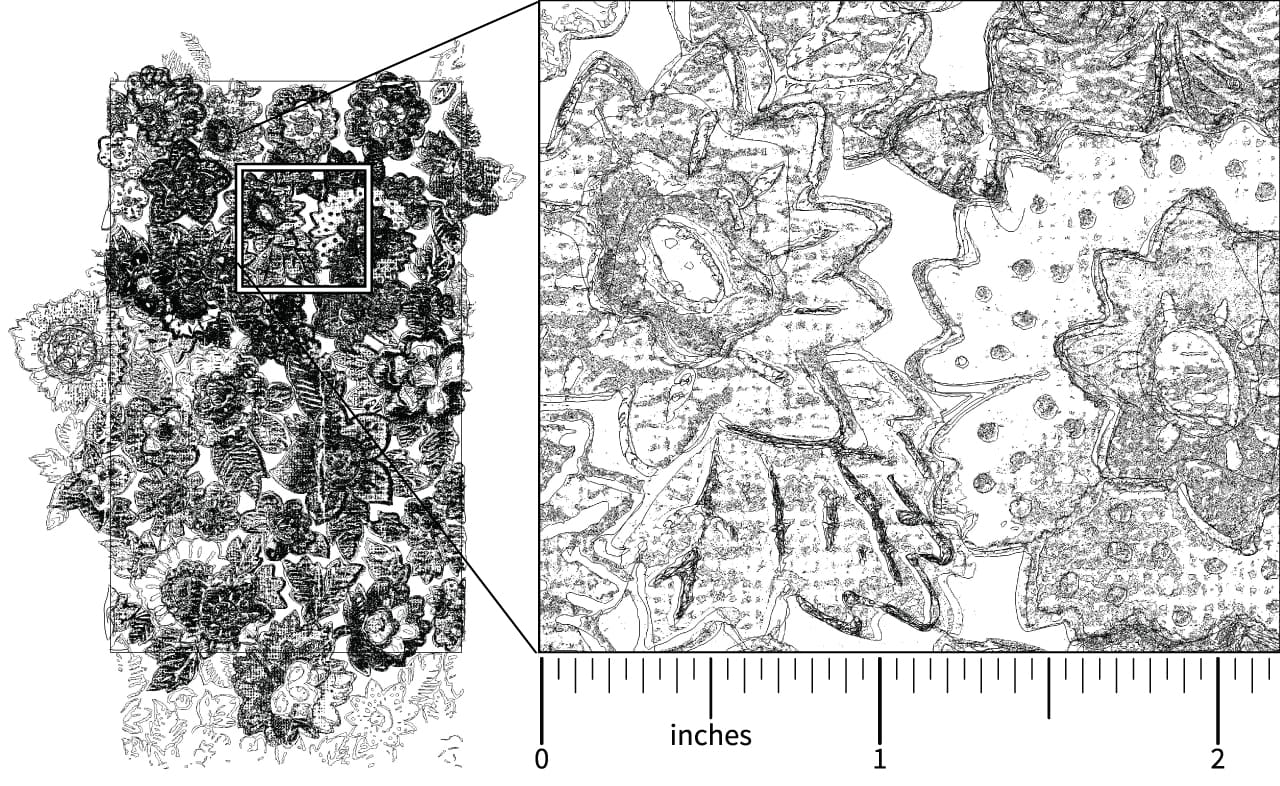
Up to 48 × 72 inches in a single pass. Larger originals are captured in sections and seamlessly assembled, so there's effectively no size limit, and a small scrap can be traced to vector and scaled to a full wall without pixelation.
Can you really capture texture and embossing? ▾
Yes. We light the surface from multiple angles, 45-degree for embossing and flock, low raking for cracks and wear, polarized to cut metallic glare, so the reproduction keeps the tactile relief of the original rather than flattening it.
Your original
Is scanning safe for a fragile or crumbling sample? ▾
Very. The Cruse is contactless, your piece rests on a vacuum table, held flat by gentle suction, never pressed or clamped. We reinforce weak spots by hand, scan in a dust-proof chamber, and store the original climate-controlled. We've safely captured samples that were literally crumbling with age.
What if I can't remove the wallpaper from the wall? ▾
Cut out a section of the wall itself, up to our scan size, and ship it reinforced, or send high-resolution photos if cutting isn't an option. We've navigated both many times; reach out first and we'll guide the safest route.
How should I package a crumbling sample? ▾
A ziplock bag (to catch loose flakes, they still hold pattern clues), taped to rigid cardboard, wrapped in bubble wrap, inside a sturdy box marked fragile. If it's more powder than paper, message us first.
Timing & options
How long does scanning take? ▾
We aim to send a digital preview within about a week of your sample arriving; if retouching is needed, most jobs wrap within 2–3 weeks. You approve the preview before we go any further.
Do I have to keep the aged look, or can it be restored? ▾
Your call, and you can see both. Because we edit non-destructively, we can show you the reproduction at, say, 20% or 50% restored versus fully pristine on your press proof, and you choose how much character to keep.
Why does scanning quality matter so much? ▾
Because everything after it is downstream. Retouching, colorway, and printing can only work with what the scan captured, detail that wasn't recorded can't be added back later. A great recreation starts with a great scan.
More on Recreation
More on capturing a sample at full fidelity, and why the scan decides how close the finished reproduction can get.

How To Reproduce Existing Wallpaper Designs
Photographing a pattern, finding the repeat, and preparing a design for recreation.
Read more→
Is It Possible to Reproduce Old Wallpaper?
How a print shop evaluates a vintage pattern for faithful reproduction.
Read more→
Mastering Press Proofs to Recreate Wallpaper
What a press proof is and the role it plays in matching color and material.
Read more→Have a sample to digitize?
Send a photo and we'll tell you what we can capture, with a digital preview usually within a week.