
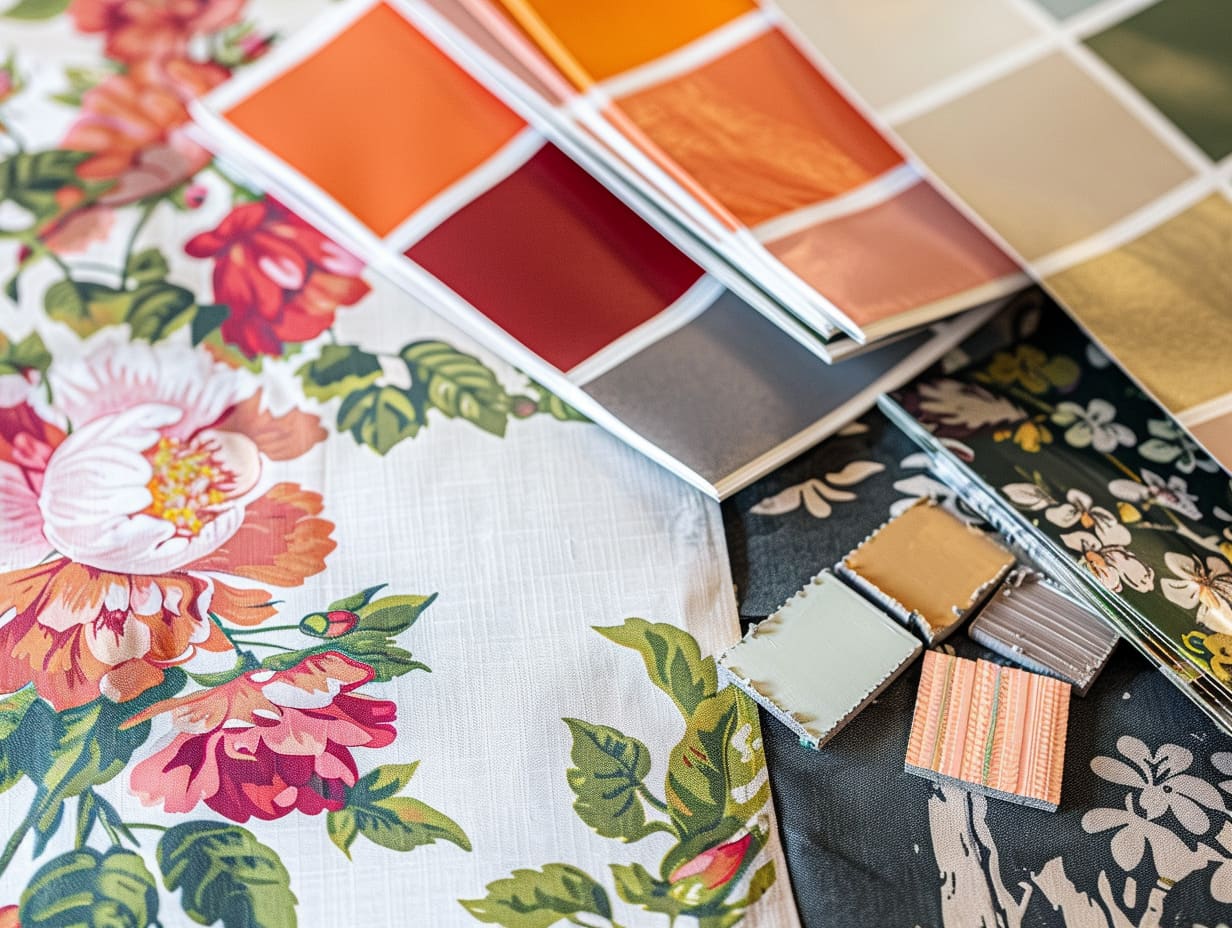
Color Matching for Wallpaper Reproductions
A 20,000+ color library, printed proofs, and your eye on every round.
The Honest Answer
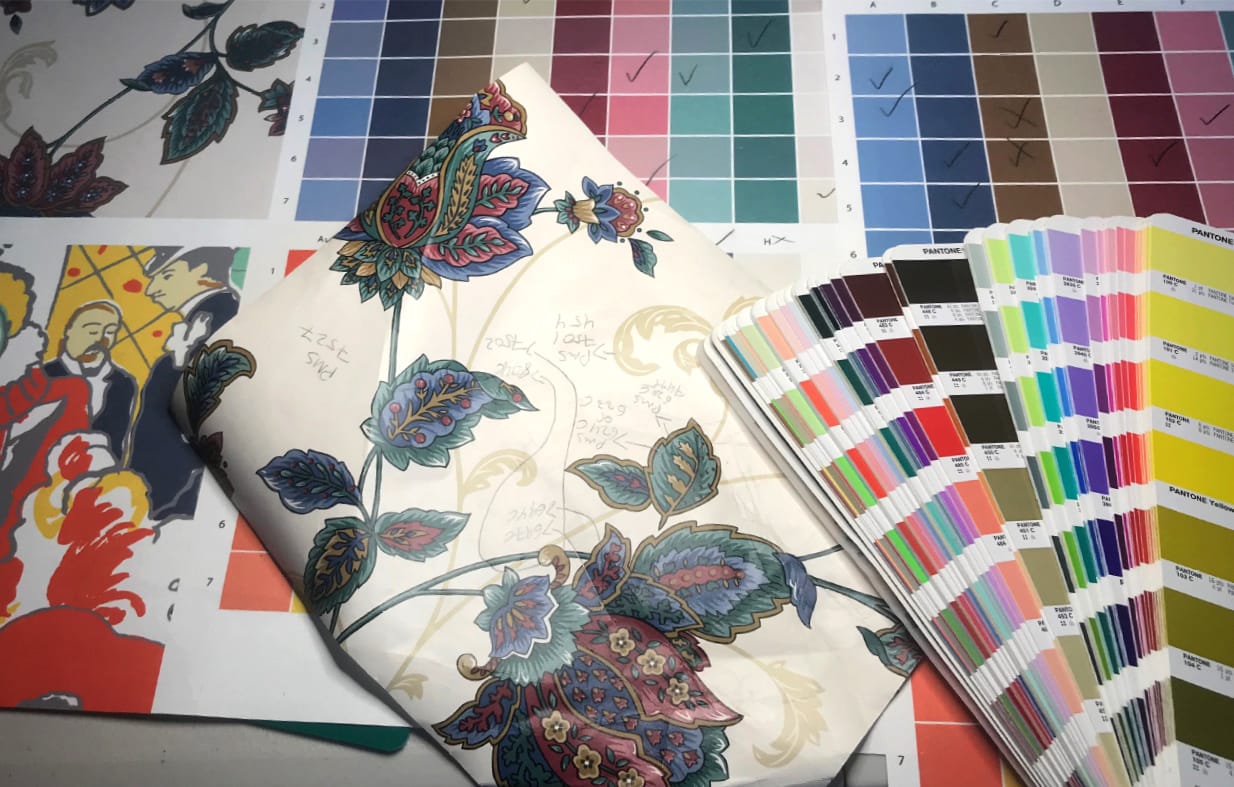
Very Close, Often Indistinguishable
Your blues will be blue. Your greens will be green. Any variance will be slight: on many jobs you can't tell the reproduction from the original, and on others a single hue sits a shade off.
The hardest to hit are bold blues, oranges and reds, and some families of beiges and creams. We assess every sample before you commit and tell you up front, on the estimate, how close we expect to get, so the expectation is set before the first proof, not after.
Digital vs. Traditional
Why a Vintage Color Behaves Differently
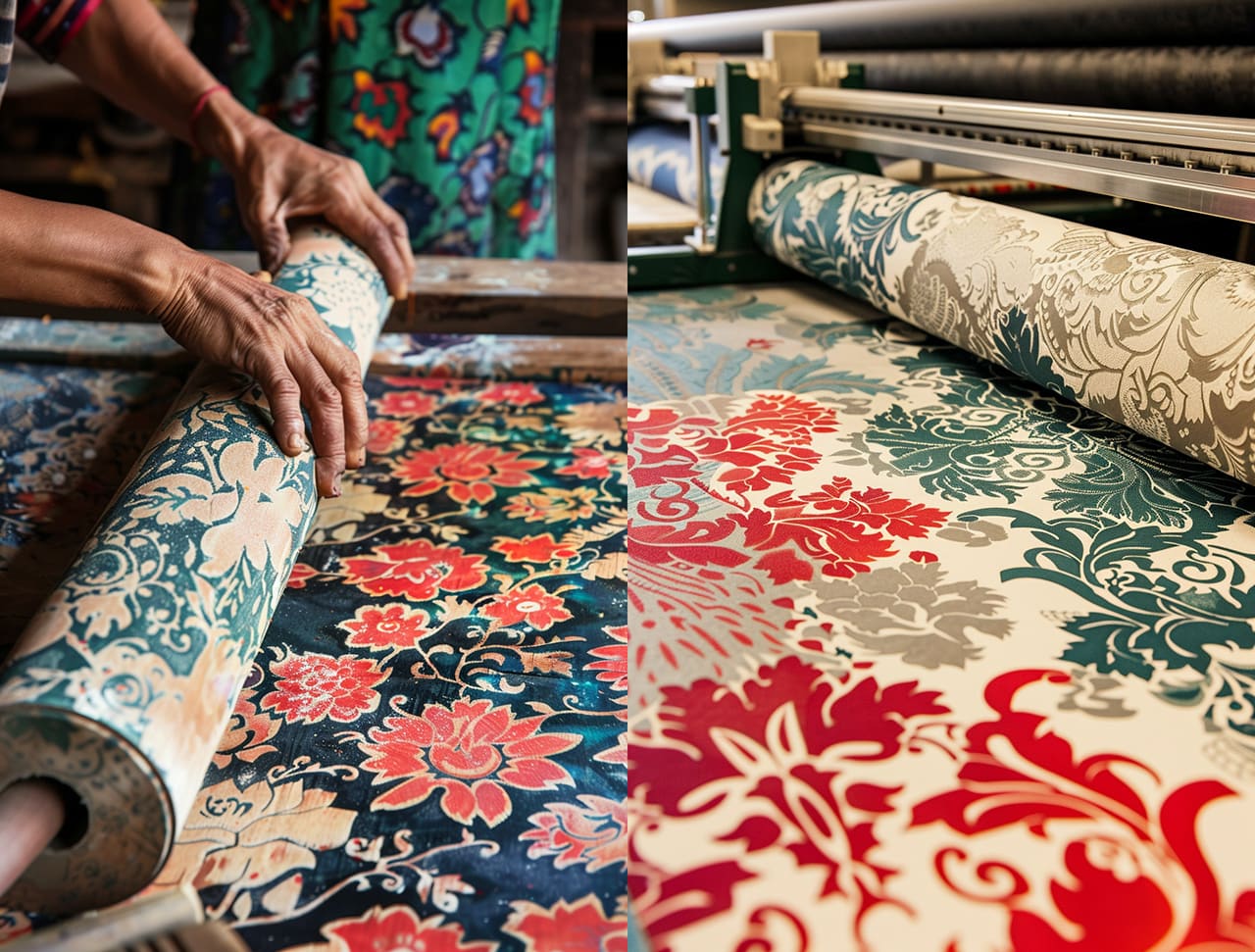
A digital press mixes cyan, magenta, yellow and black in a single pass, which is what makes custom reproduction fast and affordable. Most wallpaper printed before the 1990s was made another way: solid inks, premixed by hand and laid down one color at a time through screens or carved blocks, some of them from pigments a four-color process can only approximate.
Those inks also sat on the surface, so you could feel them. A digital print is flat. Where the original's sheen or texture matters, we print on textured substrates like Grasscloth or Canvas, and over white ink on metallic stocks like Gold Flash for the gleam of a metallic ink.
Match to a Named Color
The Libraries We Match From
Proofing
Matched in Our Shop, Judged in Your Room
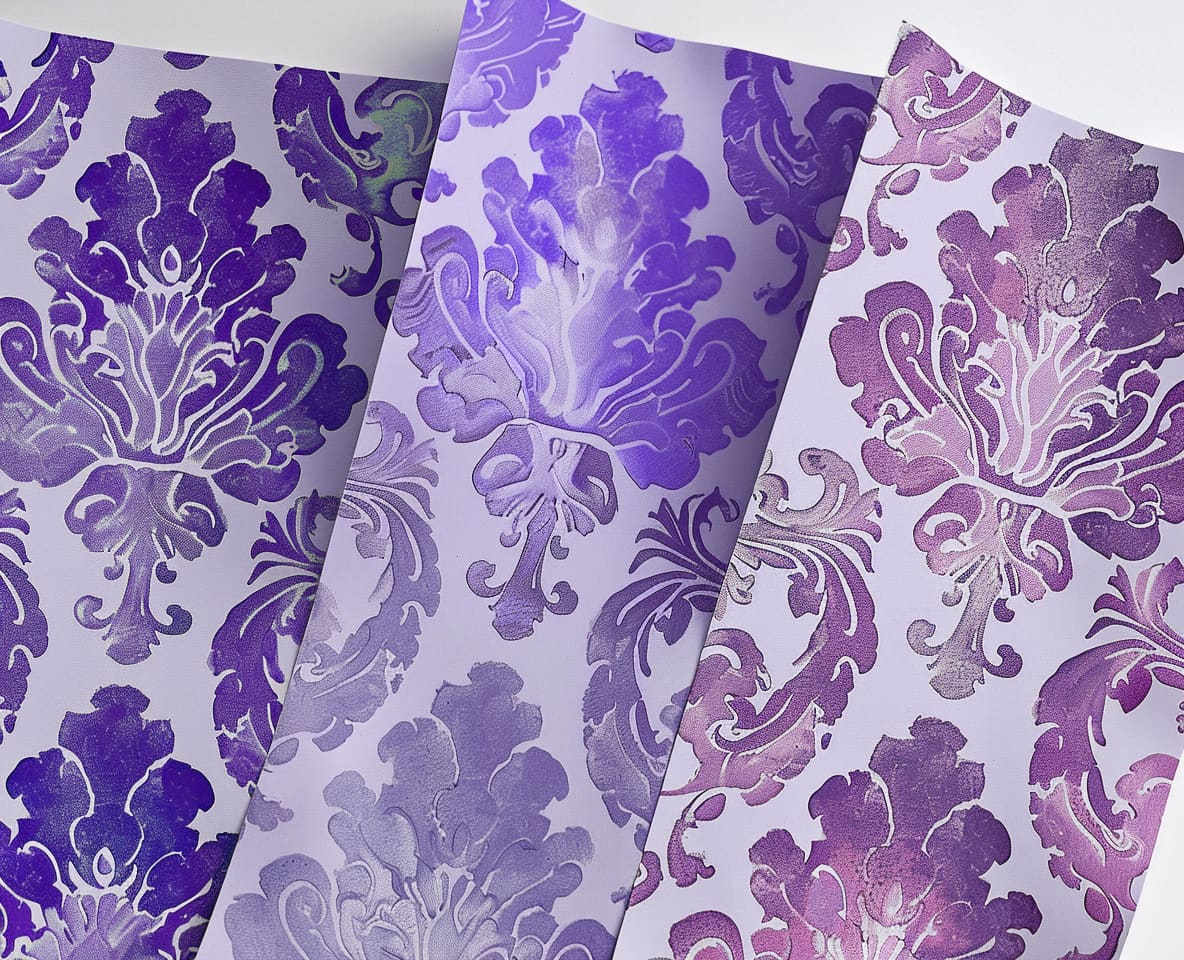
Round one: we match your sample in-house as closely as we can, side by side under natural and artificial light, and mail you a printed proof on the material your rolls will be printed on.
Round two, when it's needed, is usually about the number and complexity of the colors, and about your space: wall paint, trim and furniture all change how a color reads. You tell us where it sits warm, cool, light or dark, and we adjust.
Studio Express includes up to three rounds and Precision Archival up to five. Nothing goes to production until you've signed off on a printed proof.
Two Levels of Match
How Close, and What It Costs
Studio Express
3–6 week turnaround
A close visual match, typically within 2–4%, matched by eye and on press against your sample. The right fit when the room needs to look right.
- UHD scanning & pattern reconstruction
- Close visual color match (2–4%)
- Up to 3 rounds of proofs
Precision Archival
6–8 week turnaround
Color reverse-engineered to within 1–2%, with physical chip matching, for landmarks, museums and anything answering to a preservation board.
- Everything in Studio Express
- Forensic color match (1–2%)
- Physical chip matching (Pantone, Sherwin-Williams, Benjamin Moore)
- Up to 5 rounds of proofs
The number of colors drives the price because each hue is separated by hand before it's matched: a two-color pattern takes a fraction of the time of an eight-color one. See the full recreation pricing.
Getting the Best Match
Send a Color With Your Sample
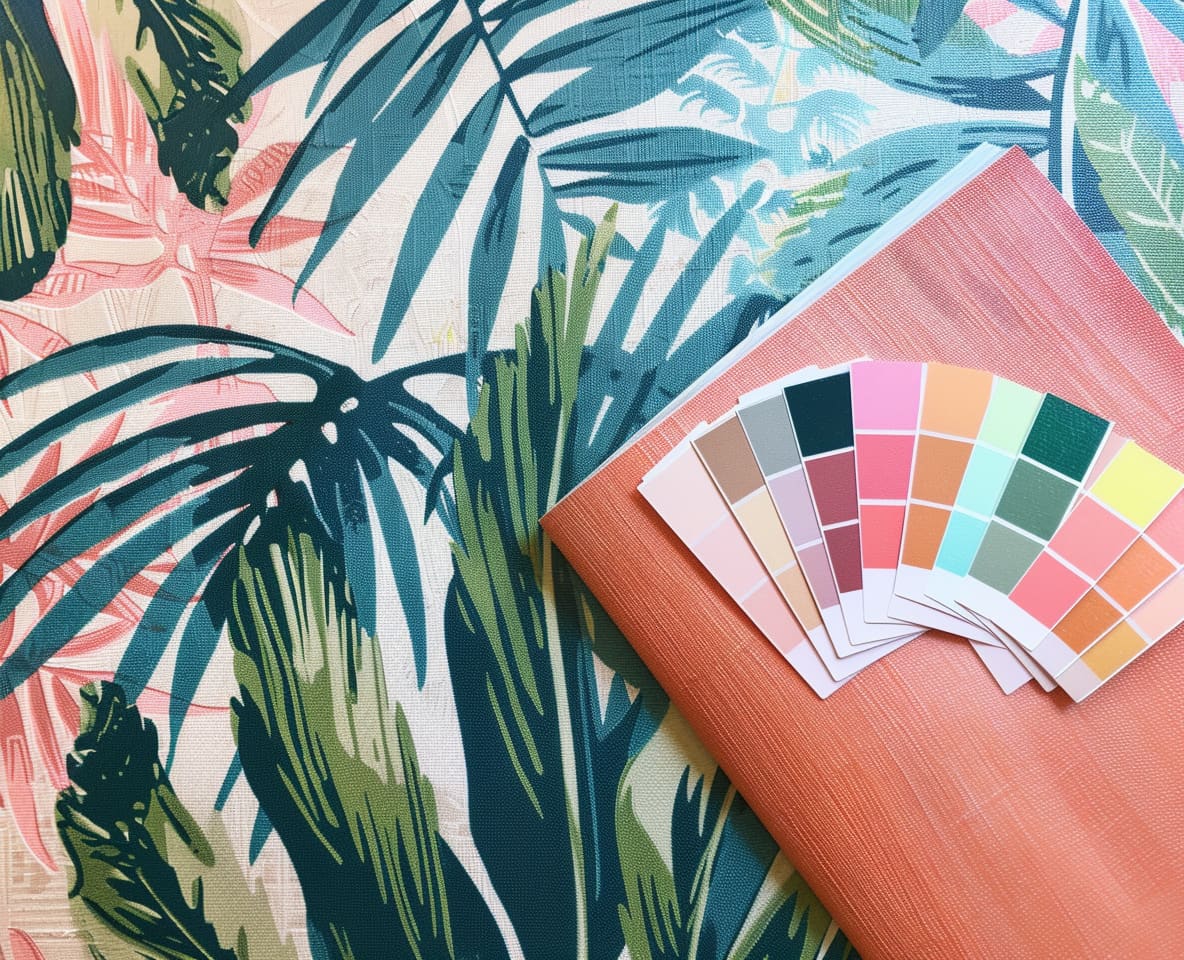
When color is critical, collaboration works best. Send paint chips or a Pantone reference along with your wallpaper: a named color is a fixed target, and it cuts both the rounds and the schedule.
Prefer to print elsewhere? Digital reproduction is available on its own: we scan, repair and color-separate your artwork and hand off a print-ready file to the shop of your choice.
Patching a Wall?
Why We Usually Reprint the Whole Wall
Matching a small patch to an aged original is the hardest color job there is. Even a close match can show side by side, and locking in every hue can take many rounds, with the matching outpacing the cost of the printing itself.
Reprinting the full wall is almost always the better result, and usually the better value. Where insurance or a third party is covering repeated sample rounds, we'll take the patch on, with expectations set from the start.
Joseph and his team at Fine Print were key to a successful re-creation of a late-1800s burlap wallpaper pattern and color.
Color Matching, Answered
Accuracy
How close can digital printing get to my original colors? ▾
Very close, and often indistinguishable. Your blues will be blue and your greens green; any variance is slight. How slight depends on the service level: Studio Express delivers a close visual match, typically within 2–4%, and Precision Archival reverse-engineers color to within 1–2%.
We tell you up front, on the estimate, how close we expect to get with your particular sample, and you approve a printed proof before a single roll is produced.
Which colors are hardest to match? ▾
Bold blues, oranges and reds, and some families of beiges and creams. Older wallpapers were printed with premixed solid inks, some made from pigments like ultramarine or cadmium, that hit saturations a four-color digital process can only approximate. If your pattern leans on those hues, we'll flag it when we assess your sample.
Can you print metallic, fluorescent or embossed colors? ▾
Not with ink. We don't print metallic or fluorescent inks, and a digital print is flat, without the raised relief of a screen or block print. For metallics we print full color over a white ink layer on metallic substrates like Gold Flash or Silver Flash. For texture, textured substrates such as Grasscloth, Canvas, Suede or Mystical bring back a physical surface.
Why might a color look different once the wallpaper is on my wall? ▾
Light and surroundings. A sample matched under daylight-balanced light reads differently under warm incandescent or LED bulbs, and wall paint, trim and furniture all shift how the eye reads a color. That's why the proof is mailed to you, so you judge it in the room it's going into, under its own light.
Proofs & rounds
How many rounds of proofs does a color match take? ▾
Many matches land in the first round, and two is common. Studio Express includes up to 3 rounds of proofs and Precision Archival up to 5, for patterns with many colors or work that answers to a preservation board.
Round one we match in-house as closely as possible, under natural and artificial light, and mail it to you. A second round is usually driven by the number and complexity of the colors and by the colors of your space.
How do you check a match before it ships? ▾
Side by side with your original, in a professional lightbox and under both natural and artificial light, on a press calibrated monthly and matched against our 20,000+ color library. The proof you receive is printed on the same material as your final run.
What part does my feedback play? ▾
The deciding part. You review the proof in your space and tell us where a color reads warm, cool, light or dark; we adjust the mix and send the next round. Your sign-off on a printed proof is what releases production.
Planning your project
Which color libraries can you match to? ▾
Pantone (6,631 colors), Benjamin Moore (3,676), Valspar (2,858), Behr (2,470), Dunn-Edwards (1,848), Sherwin-Williams (1,535) and Farrow & Ball (303). Physical chip matching against Pantone, Sherwin-Williams and Benjamin Moore is part of Precision Archival.
How can I get the best possible match? ▾
Send paint chips or color references along with your wallpaper sample. A named color from one of the libraries above gives us a fixed target and cuts down the rounds, which also shortens the schedule on an urgent project.
Can you match a patch to fill a gap on an existing wall? ▾
We usually advise against it. Next to an aged original, even a close match can show, and locking in every color for a small patch can take many rounds, costing more than the printing itself. Reprinting the whole wall is almost always the better result. If insurance or a third party is covering repeated sample rounds, we're glad to take it on, with expectations set from the start.
Can I get a color-matched file printed somewhere else? ▾
Yes. Digital reproduction is available as a standalone service: we scan, repair and color-separate your artwork and hand off the print-ready file to the print shop of your choice. If you need every aspect of a vintage print reproduced, including raised ink and metallic inks, a traditional screen or block printer is the route, at considerably more time and cost.
More on Color Matching
How a match is built, proofed and approved, and how to get your sample to us safely.
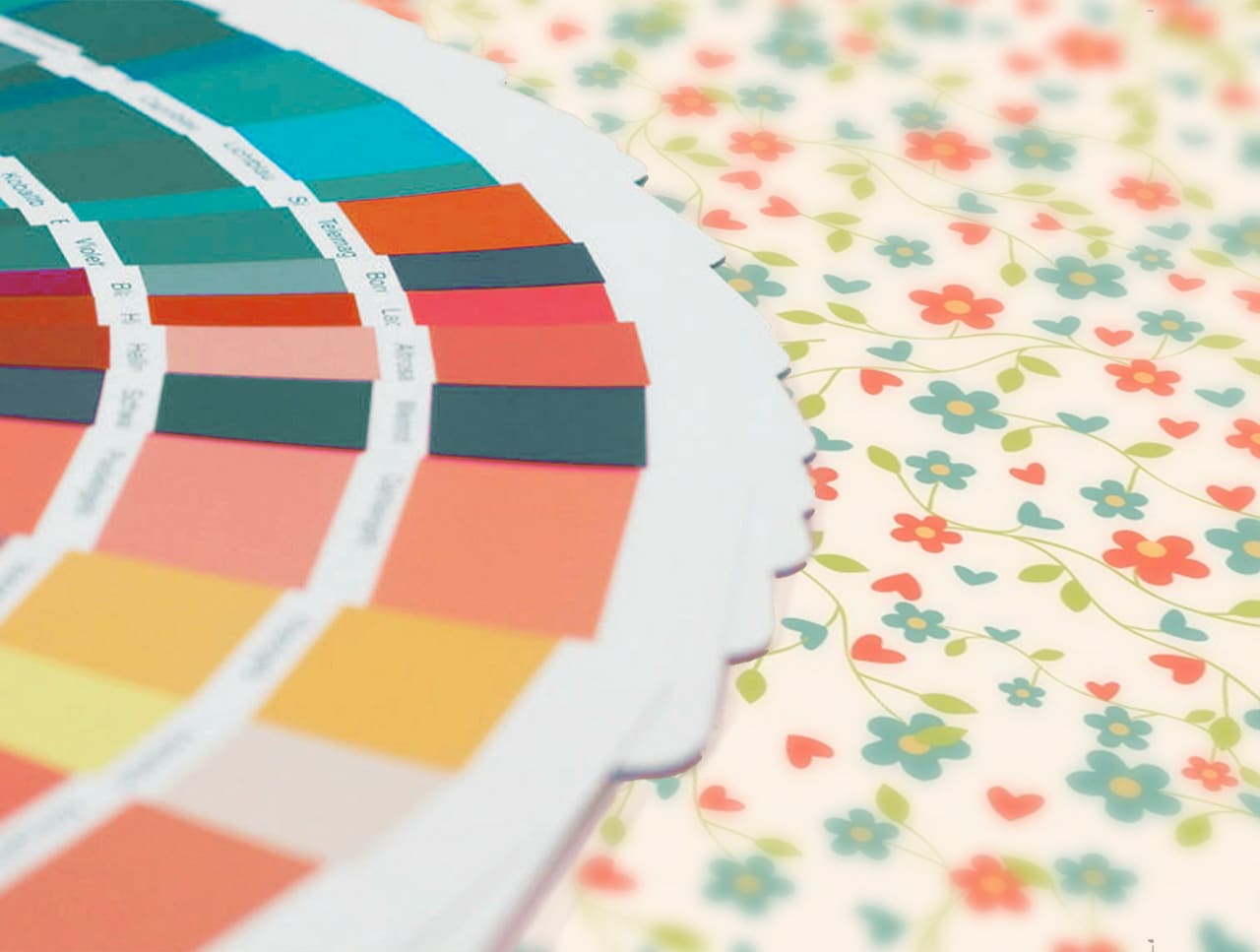
How to Color Match Vintage Wallpaper
Color theory and modern tools for an accurate recreation of a classic pattern.
Read more→
Mastering Press Proofs to Recreate Wallpaper
What a press proof is and the role it plays in matching color and material.
Read more→
How to Send Wallpaper Samples for Restoration
Packing and shipping a sample so it arrives intact and ready to match.
Read more→Have a color to match?
Send a photo of your wallpaper and we'll tell you how close we can get before you commit to anything.