Project
Exhibition Wallpaper for Metahaven's Islands in the Cloud at MoMA PS1
How we printed 1,500+ sq ft of large-scale graphic wallpaper for Metahaven: Islands in the Cloud at MoMA PS1, from print-ready file and edge-sharpness proofs to installation.
 By Joseph A. Gornail
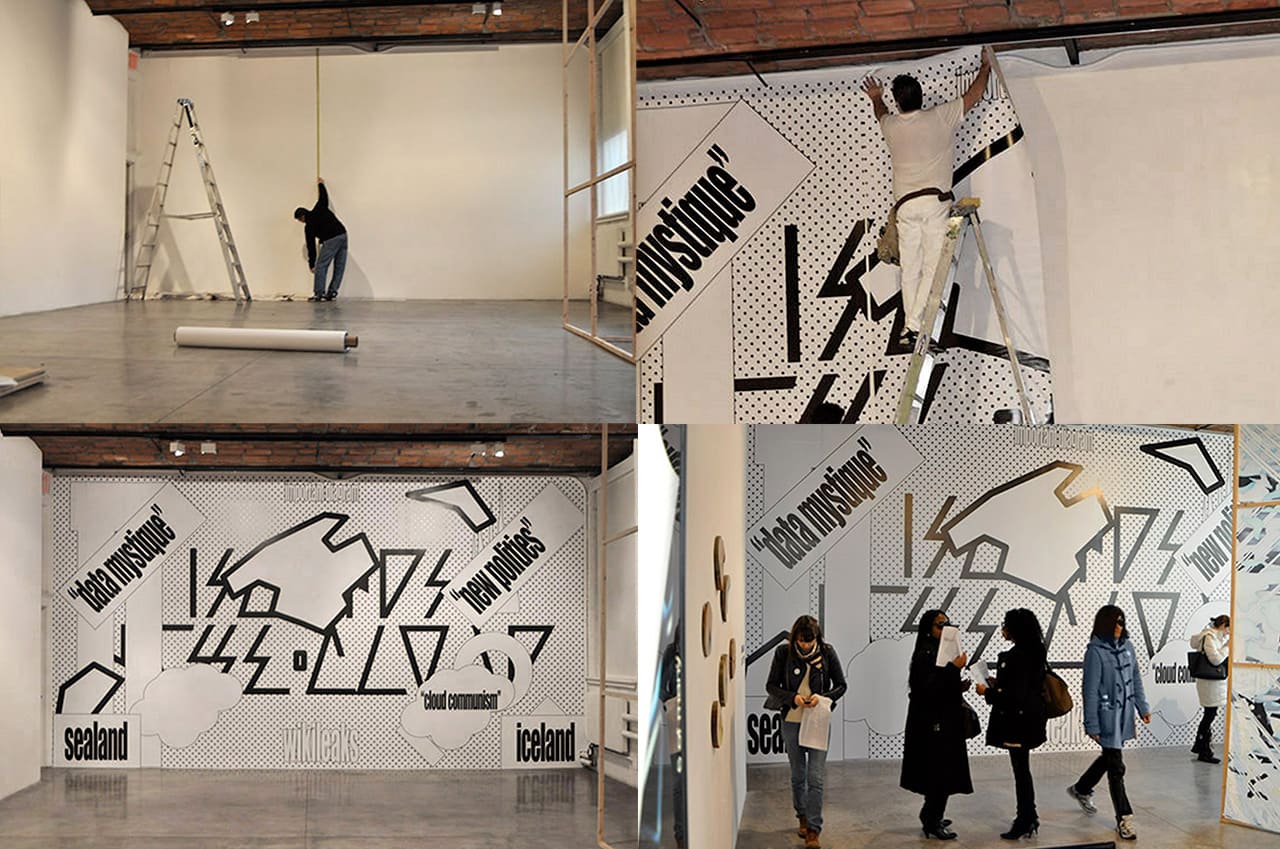
In January 2013, MoMA PS1 in Long Island City, Queens, opened Metahaven: Islands in the Cloud, the first museum exhibition to focus on the Amsterdam design studio Metahaven. The centerpiece of the gallery was a wall-sized graphic: a field of black dots, jagged triangles and lightning strokes, broken up by slogans like “data mystique,” “new polities” and “cloud communism.”
We printed it: more than 1,500 square feet of exhibition wallpaper, produced from Metahaven’s artwork and hung by the museum’s own installation team ahead of the opening.
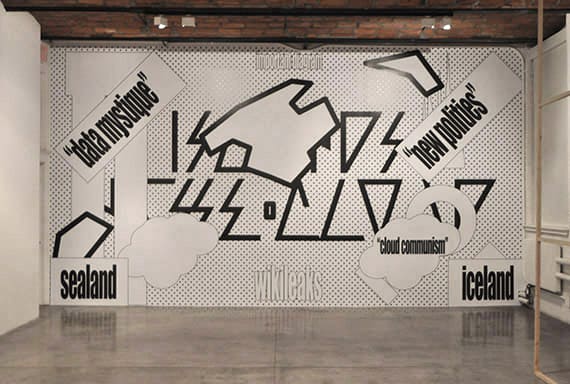
The finished wall in the gallery, ready for opening day.
The Exhibition
Metahaven was founded in 2007 by Vinca Kruk and Daniel van der Velden as a design and research studio. Their practice uses the vocabulary of graphic design, logos, identities, branding, to examine power: how states, currencies and information networks present themselves. Islands in the Cloud gathered their research and identity work for WikiLeaks, proposals for the self-proclaimed micronation of Sealand, and material for a new cloud-hosting venture based in Iceland. Those three names run along the bottom of the wall.
The show ran from January 20 to April 21, 2013, and was organized by Peter Eleey, Curator at MoMA PS1, with Alhena Katsof. MoMA PS1’s operations department managed the gallery logistics and the installation timeline.
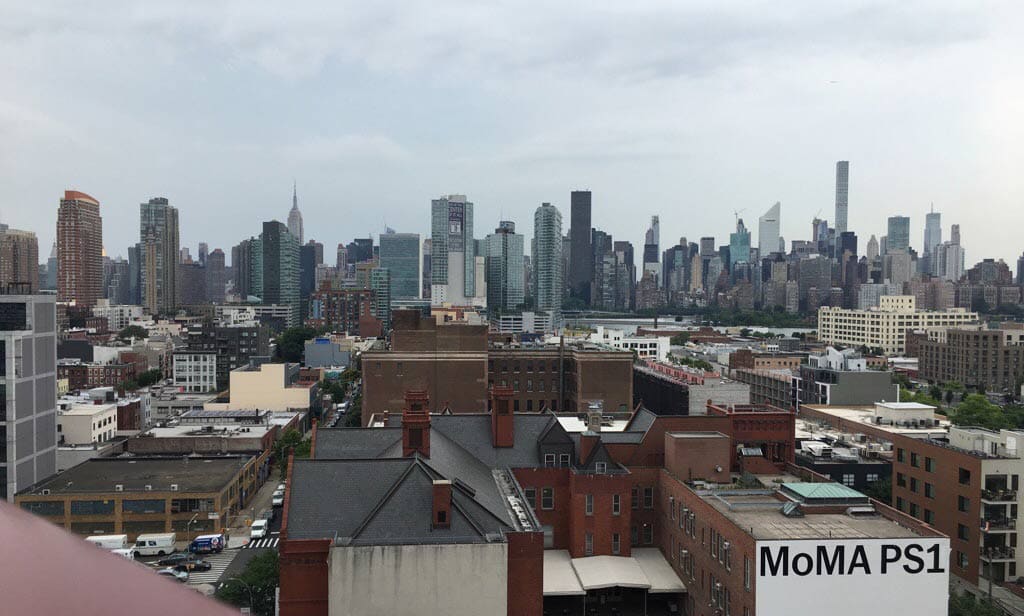
MoMA PS1 in Long Island City, Queens, looking across the East River to Manhattan.
Project Specifications
- Client: MoMA PS1, for Metahaven: Islands in the Cloud
- Artwork: print-ready digital files from the artists
- Printing: Mimaki wide-format, UV-cured inks
- Material: Type II, fabric-backed, unpasted traditional wallpaper
- Total: 1,500+ square feet
- Installation: MoMA PS1’s own installation team
Proofing for Clean Edges
Metahaven delivered print-ready files, so there was no artwork to rebuild and no color to match: the palette is black and white. What mattered was edge quality. At gallery scale, every dot and every stroke of type is seen up close, and a hard black edge against white paper shows any softness, feathering or banding immediately.
So the proofs had one job: to show the curatorial team, at full size, that the edges would print cleanly. Once they were satisfied with the crispness of the graphics on the actual production material, we moved into the full run.
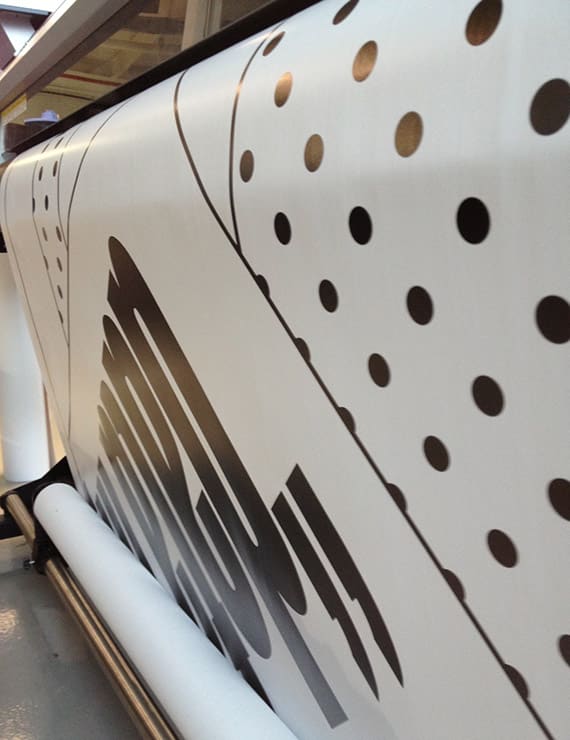
On the press: black dots and type with hard, clean edges on white Type II paper.
Why Type II
For a single wall that a public gallery’s visitors will walk past for three months, we printed on commercial Type II, fabric-backed and unpasted. It stands up to the traffic of a public gallery and hangs flat over a large span.
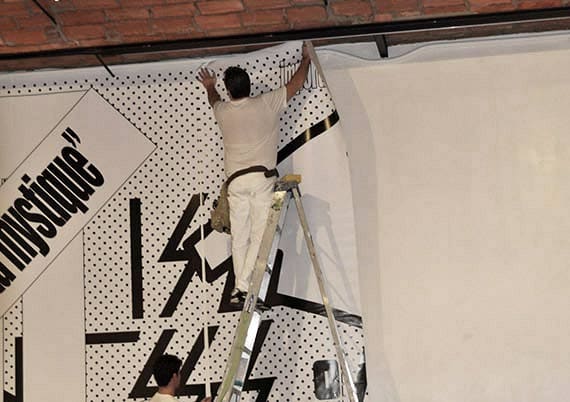
Fabric-backed Type II, smoothed into place at the top of the wall.
The fabric backing also makes it straightforward to remove when the exhibition closes. Our buyer’s guide to Type I, Type II and peel & stick covers when each one makes sense.
The Installation
The museum’s own crew hung the paper. They started where every good installation starts: with a plumb line on an empty wall.
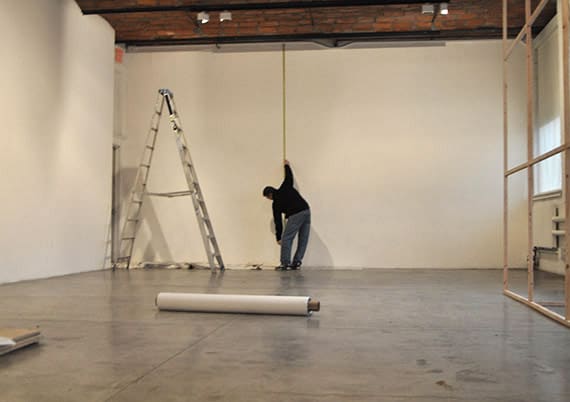
Day one: a plumb line on the bare wall.
From there they worked panel by panel across the gallery. Words like “data mystique” and “Sealand” were split across panels and rejoined on the wall, so every drop had to meet the one beside it exactly.
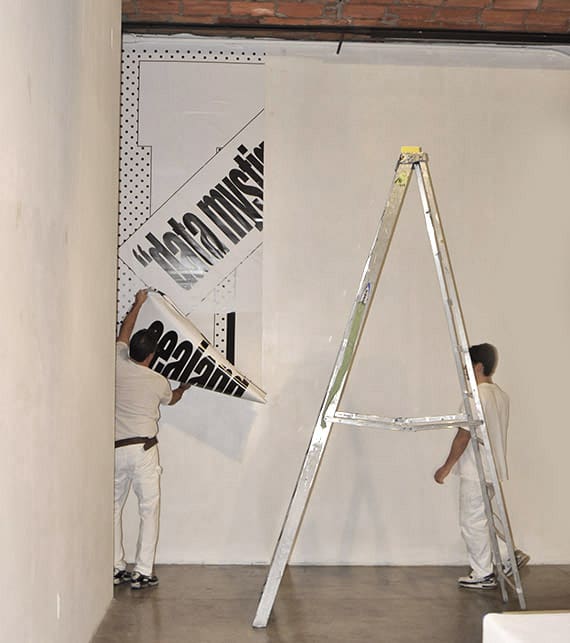
“Sealand” going up beneath “data mystique.”
Bold black graphics are unforgiving at the seams: an outline that steps out of line is visible from across the room. Because every panel is printed to the same repeat, the crew could match dots, outlines and lettering continuously from one end of the wall to the other.
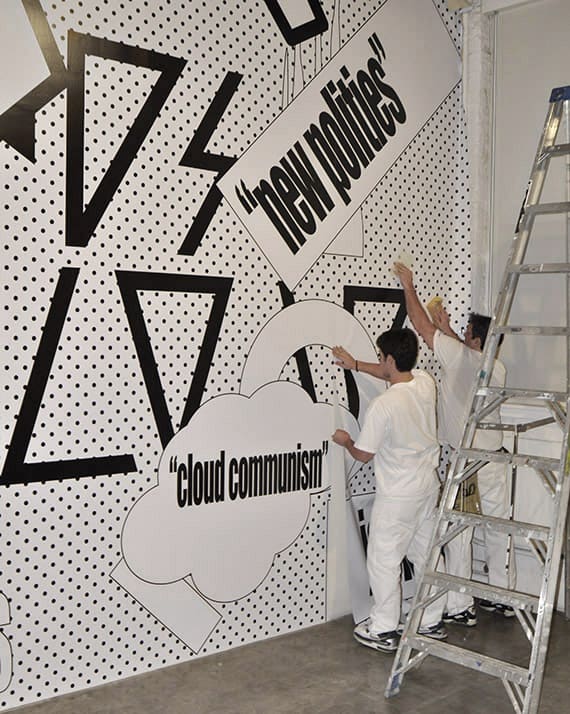
Matched at every seam, so the graphic reads as one continuous wall.
It went up without incident, and when Islands in the Cloud closed in April, it came down just as cleanly, the way exhibition wallpaper should.
Opening Day
The exhibition opened on January 20, 2013, during MoMA PS1’s Winter Open House.
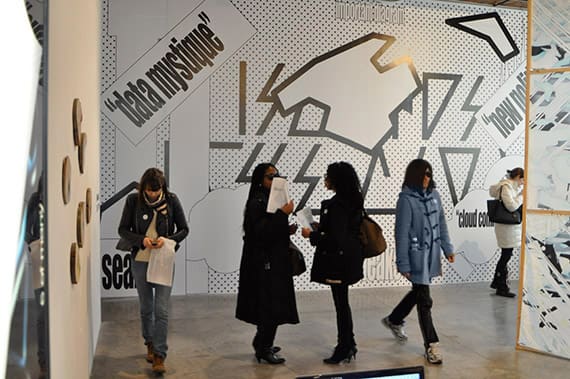
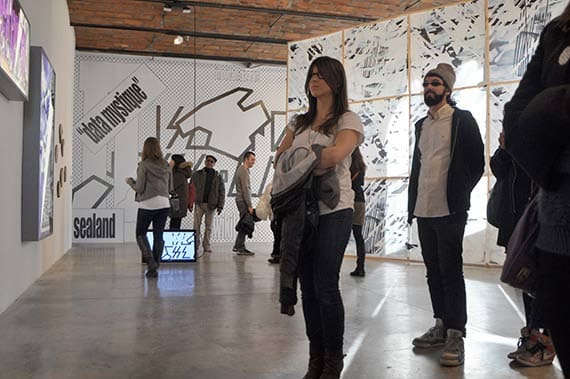
The wall set the tone for the whole gallery. Visitors moved between it and the rest of Metahaven’s work, including a tall translucent installation of printed panels in a wooden frame.
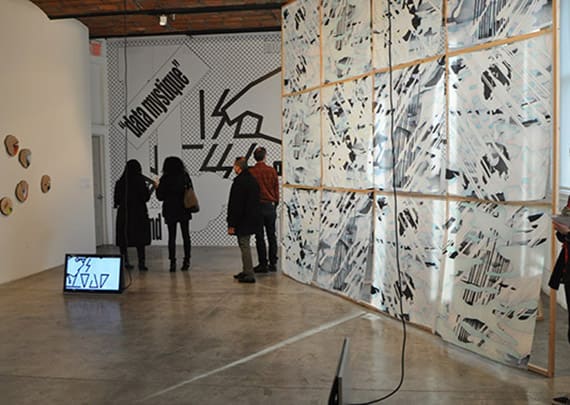
At full scale, the slogans read like headlines for the room, with “data mystique” and “new polities” across the top and Sealand, WikiLeaks and Iceland along the bottom.
What This Project Taught Us
- Proof what matters for the piece. For a black-and-white graphic, the question isn’t color, it’s edges. Proofing for the right thing saves time on both sides.
- Museum timelines are fixed. An opening date doesn’t move, so files, proofs, production and delivery have to be planned backward from it.
- Plan for the end of the show. A fabric-backed Type II paper lets an exhibition wall come down as cleanly as it went up.
- Work with the museum’s team. Curators, artists and operations each own a piece of the schedule. Clear handoffs keep a large print job from becoming the bottleneck.
Questions We Hear About Museum and Exhibition Wallpaper
Can you print directly from an artist’s files? Yes. Most exhibition work arrives print-ready, as it did here. We check the files for scale and resolution, then send a printed proof before production. Our technical specifications list what we need.
How far ahead should a museum or gallery order? Plan backward from the install date: allow time for a proof, approval and production, plus delivery. Our standard turnaround is 7–10 business days once the proof is approved, and we can plan a rush around a fixed opening.
Will exhibition wallpaper come down cleanly when the show closes? That’s a material choice. Fabric-backed Type II, which we used here, is built to be stripped from the wall. Tell us how long the show runs and what happens to the wall afterward, and we’ll recommend the right paper.
Can a museum’s own crew hang the wallpaper? Yes. We print; installation is done by your team. At MoMA PS1, the museum’s installation crew hung the paper.
Do you work with artists, too, or only institutions? Both. We print for artists, galleries and museums, including Ruth Asawa wallpaper at the Whitney Museum and exhibition wallpaper for The Drawing Center.
Planning an Exhibition Wall?
If you’re turning artwork into an immersive gallery wall, we can take it from file to finished rolls on your schedule. See our custom wall murals, or send us the details of your show and opening date.